For Hospitals & Clinics
That is what we fix. We support single-doctor clinics to multi-specialty hospitals, adapted to your scale and team size.
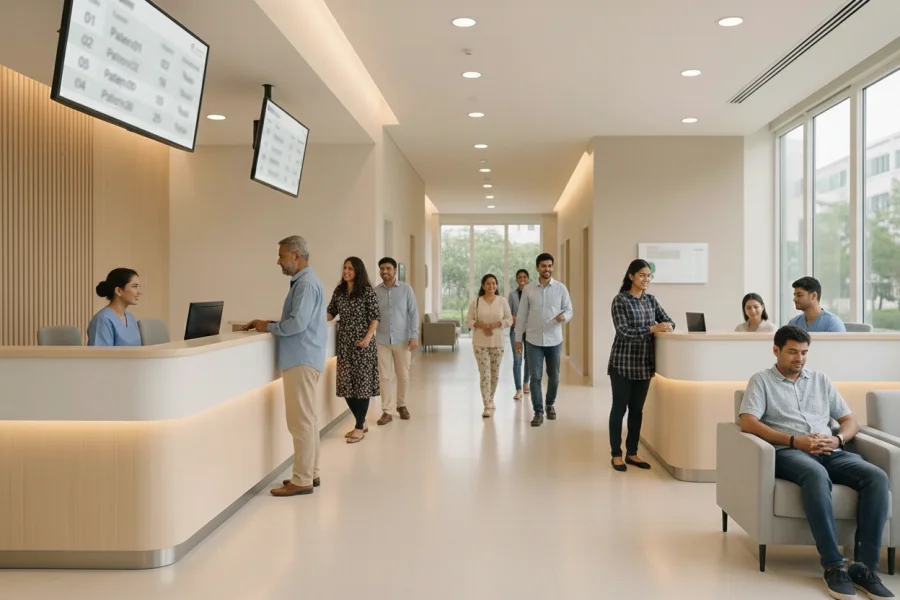
The problem is rarely the care. It is almost always what happens around it.
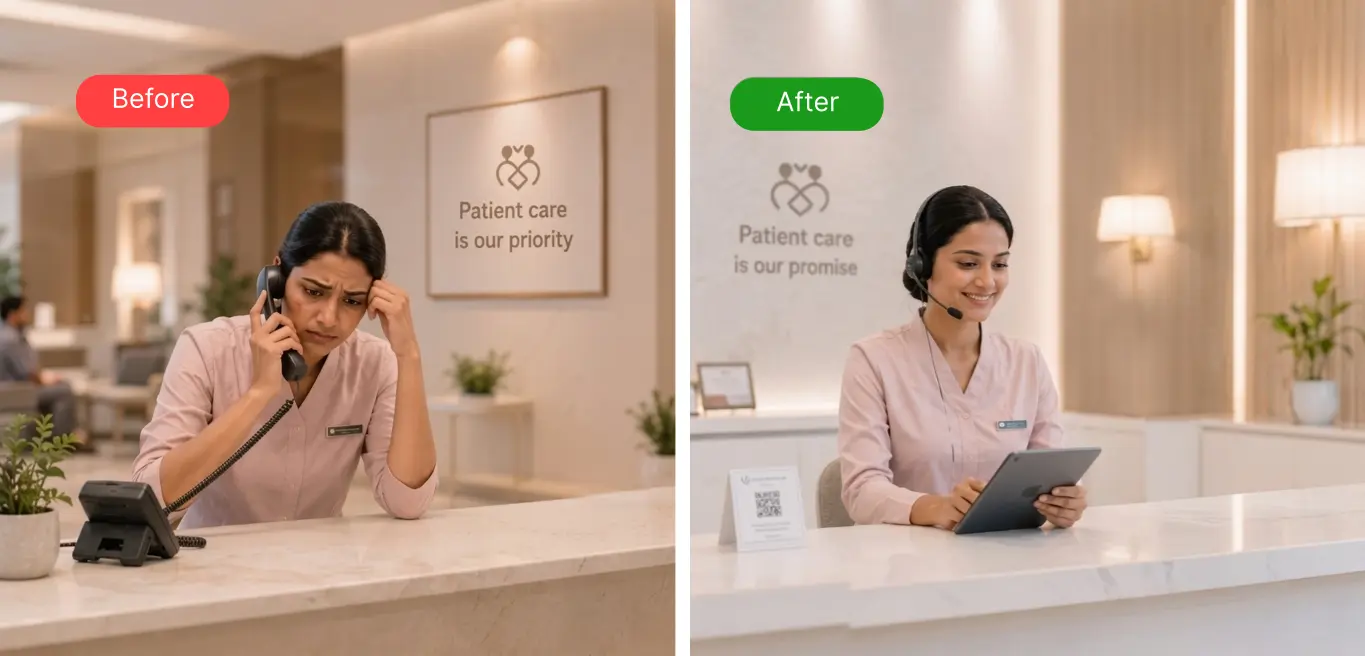
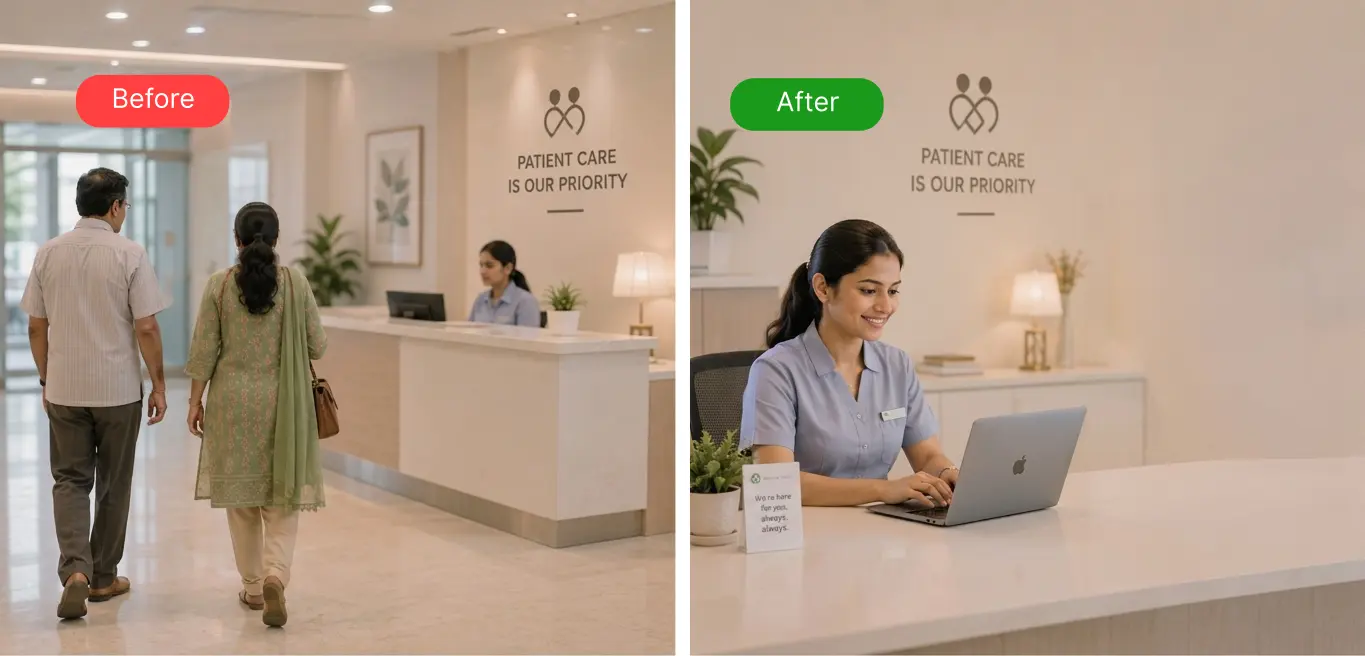
Your front desk gets 80 calls a day. 20 go unanswered. Patients who can't get through don't call back, they book somewhere else. You never see the loss because it never shows up in your data.
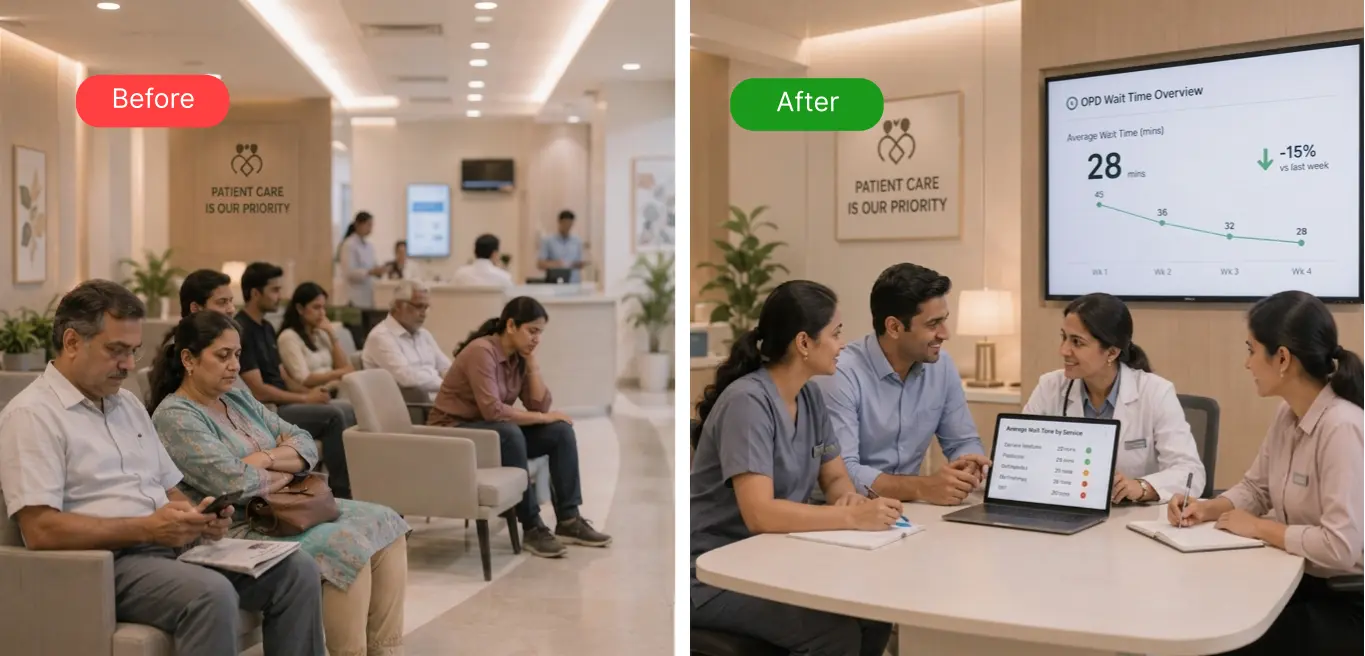
Patients wait 45 minutes past their appointment time. Staff are stressed. Doctors are running late. Complaints go to Google reviews, not to you. The reputation damage is slow but real.
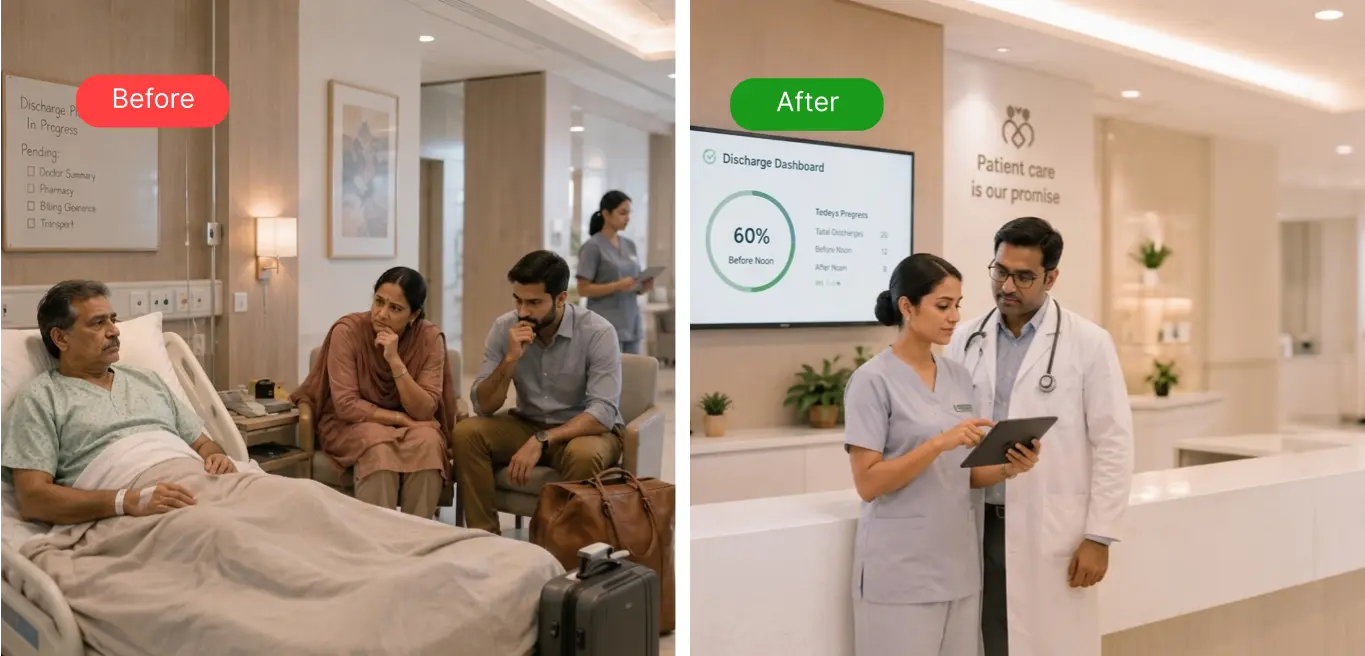
Most discharges happen after 2pm. Beds sit blocked for hours after patients are clinically ready. OT schedules slip. Nobody owns the last mile between "clinically ready" and "physically gone."
Patients leave and disappear. No recall system. No follow-up calls. No way to know who came back and who didn't. Your team is too busy with today's patients to chase yesterday's.
30 to 60 days.
Fixes appointment leakage: missed calls, cancellations, no-shows, weak follow-ups. Installs a weekly routine your team can run consistently.
60 to 90 days.
An audit-led installation for deeper operational issues across roles and workflows. For when the problem is handoffs, SOP discipline, and accountability across the system.
Ongoing · quarterly.
A standing growth partner. Quarterly priorities, weekly rhythm, and numbers reviewed with leadership until growth is a system, not an event.
Featured paper · "We don't just fix hospitals. We study them."
India's hospitals already have one of the lowest average lengths of stay in the world. Yet beds remain underproductive, OTs run late, and emergency care absorbs the pressure. This paper asks why, and what to do about it.
Yes. We support single-doctor clinics to multi-specialty hospitals. The approach is adapted to your scale and team size.
We map your front-door flow, identify leakage points, assign ownership, install basic scripts and SOPs, and set up weekly tracking so improvements are visible immediately.
It fixes appointment leakage (missed calls, cancellations, no-shows, weak follow-ups) and installs a weekly routine your team can run consistently.
CGOM is an audit-led installation for deeper operational issues across roles and workflows. Choose it when the problem is not just OPD, it's handoffs, SOP discipline, and accountability across the system.
Minimal daily time. We need one focused kickoff plus a weekly 30 to 45 minute review to keep the rhythm strong. Execution is handled with your coordinators and front office.
We implement. We fix what's broken, train your team, and install a weekly cadence with tracking. Most consultants deliver a report and leave. We install a working system: workflows, SOPs, trained staff, weekly tracking, and we stay until it runs without us. The difference is in what gets left behind.
Initial improvements typically show within 4 to 6 weeks (call handling, no-show recovery, follow-ups). Full stabilisation varies by size, but progress is measured weekly from day one.
Yes. It's a short diagnostic call. Paid programs start after we agree on scope and outcomes. The check-up call is 30 minutes. No preparation needed from your side, just tell us what's breaking and we'll take it from there.